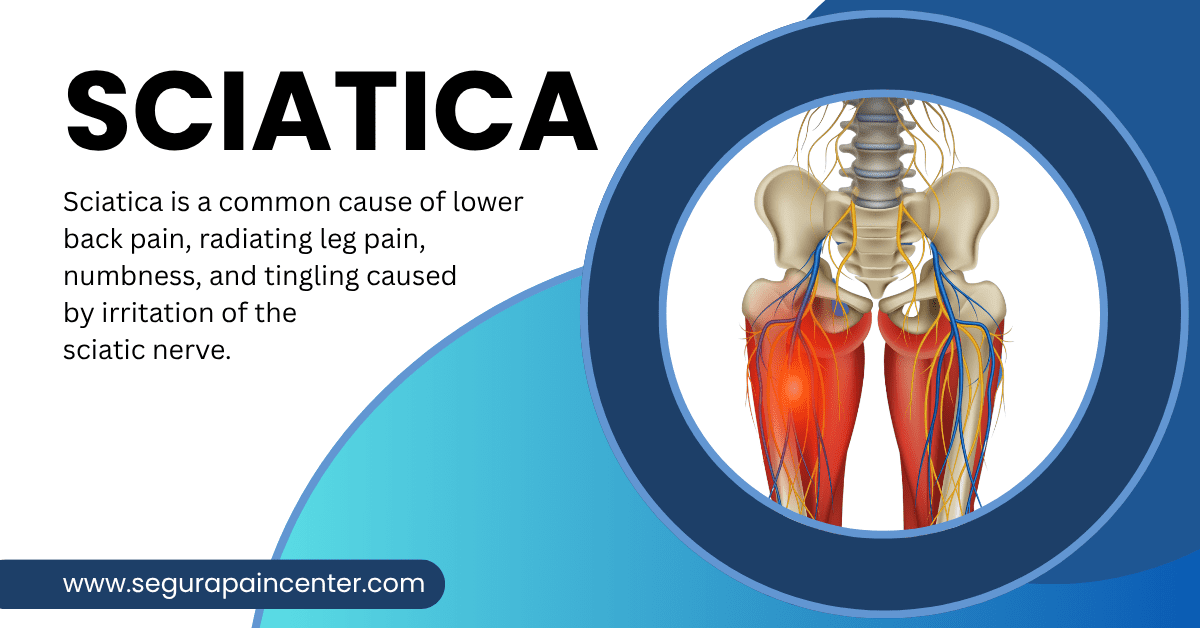
Sciatica is a common condition that occurs when the sciatic nerve becomes irritated, inflamed, or compressed. The sciatic nerve is the largest nerve in the body, running from the lower back through the hips, buttocks, and down each leg.
When pressure is placed on the sciatic nerve, patients may experience lower back pain that travels into the buttock, hip, or leg, along with numbness, tingling, weakness, or burning nerve pain. While some cases improve with conservative care, persistent or severe symptoms may require evaluation and treatment by a pain management specialist.
At Segura Neuroscience & Pain Center, our physicians diagnose the source of sciatic nerve pain and develop personalized treatment plans designed to help patients find lasting relief and return to their normal activities.
What Does It Feel Like?
People describe sciatic nerve pain in different ways. Some experience a dull ache in the lower back or buttock, while others report sharp, shooting pain that travels down the leg. Symptoms can range from mild discomfort to severe pain that interferes with work, exercise, sleep, and everyday activities.
Common symptoms include:
- Pain that radiates from the lower back into the buttock, hip, or leg
- Sharp, burning, or shooting leg pain
- Tingling or "pins and needles" sensations
- Numbness in the leg or foot
- Muscle weakness in the affected leg
- Pain that worsens while sitting
- Discomfort during prolonged driving or travel
- Difficulty standing, walking, or exercising
Sciatic nerve pain most commonly affects only one side of the body.
What Causes Sciatic Nerve Pain?
Sciatica is not a condition itself but rather a symptom of an underlying problem affecting the sciatic nerve or the nerve roots that form it.
Common symptoms include:
Herniated Disc
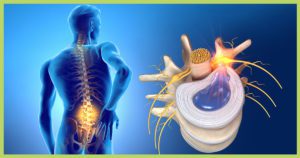
A herniated or bulging disc can place pressure on nearby nerve roots, resulting in radiating leg pain, numbness, and weakness. Herniated discs are among the most common causes of sciatic nerve pain.
Spinal Stenosis
Spinal stenosis occurs when the spaces within the spine narrow, compressing nerves and causing pain, numbness, or weakness in the legs.
Degenerative Disc Disease
As spinal discs naturally wear down over time, they may contribute to nerve irritation and inflammation.
Spondylosis
Lumbar spondylosis refers to age-related wear and tear of the spine, including degeneration of the discs, joints, and surrounding structures. These changes can contribute to nerve compression and sciatic nerve pain.
Injury or Trauma
Accidents, falls, sports injuries, and repetitive strain can sometimes damage or irritate the sciatic nerve.
Can Sciatic Nerve Pain Go Away on Its Own?
Some cases of sciatic nerve pain improve over time with rest, activity modification, stretching, and conservative care. However, symptoms that persist for several weeks or repeatedly return may indicate an underlying spinal condition that requires medical evaluation.
Ignoring ongoing symptoms can allow nerve irritation to worsen, potentially leading to increased pain, weakness, or limitations in mobility. Early diagnosis often helps patients explore treatment options before symptoms become more severe.
Can Long Car Rides Make Sciatica Worse?
Yes. Extended periods of sitting can place additional pressure on the lower back and sciatic nerve. Many people first notice worsening symptoms during road trips, long commutes, or desk-based work.
Common complaints include:
Increased leg pain after driving
Numbness or tingling in the foot
Pain that worsens while sitting
Difficulty standing upright after long periods in a seated position
If driving, traveling, or sitting for long periods consistently triggers symptoms, it may be time to schedule an evaluation.
When to See a Doctor for Sciatic Nerve Pain?
Many people experience occasional lower back discomfort. However, persistent radiating leg pain should not be ignored.
You should seek medical evaluation if you experience:
- Symptoms lasting longer than several weeks
- Pain that continues to worsen
- Significant numbness or weakness
- Difficulty standing or walking
- Pain that interferes with sleep or daily activities
- Symptoms that do not improve with conservative treatment
Early diagnosis can help prevent symptoms from becoming more severe and may reduce the need for more invasive treatments later.
When is Sciatica a Medical Emergency?
Although most cases of sciatic nerve pain are not emergencies, certain symptoms may indicate serious nerve compression and require immediate medical attention.
Seek emergency care if you experience:
- Loss of bladder or bowel control
- Severe weakness in one or both legs
- Numbness in the groin or saddle area
- Sudden, severe worsening of symptoms
These symptoms may indicate a rare but serious condition known as cauda equina syndrome and should be evaluated immediately.
Diagnosing the Cause of Sciatic Nerve Pain
The first step in treatment is identifying the underlying cause of the nerve irritation.
Our physicians perform a comprehensive evaluation that may include:
- Medical history review
- Physical examination
- Neurological assessment
- Diagnostic imaging studies
- Review of prior treatments and symptoms
Once the source of the problem has been identified, a personalized treatment plan can be developed.
Treatment Options for Sciatica
At Segura Neuroscience & Pain Center, we offer a variety of advanced treatments designed to reduce pain, improve function, and address the underlying cause of nerve compression whenever possible.
Treatment options may include:
Epidural Steroid Injections
These injections deliver anti-inflammatory medication directly around irritated nerves to help reduce swelling and pain.
Selective Nerve Root Blocks
Targeted injections can help identify and treat specific nerves responsible for symptoms.
Radiofrequency Ablation
For some patients, radiofrequency ablation may provide longer-lasting relief by interrupting pain signals transmitted by affected nerves.
Minimally Invasive Spine Procedures
Certain spinal conditions that contribute to sciatic nerve pain may be treated using minimally invasive techniques designed to relieve nerve compression.
Spinal Cord Stimulation
Patients with chronic nerve pain that has not responded to conservative treatments may benefit from spinal cord stimulation. This advanced therapy uses mild electrical signals to alter the way pain signals are transmitted to the brain.
Frequently Asked Questions
Find Relief from Sciatic Nerve Pain
Sciatic nerve pain can make everyday activities difficult, from sitting through a workday to enjoying a vacation, taking a road trip, or spending time with family. The good news is that effective treatment options are available.
At Segura Neuroscience & Pain Center, we work closely with each patient to identify the source of their pain and develop a personalized treatment plan designed to improve comfort, mobility, and quality of life.
Patients throughout Covington, Mandeville, Madisonville, Slidell, Hammond, and surrounding Northshore communities trust our team for the diagnosis and treatment of chronic pain conditions, including sciatica and other causes of radiating leg pain.
If you are experiencing lower back pain that radiates into your leg, numbness or tingling in your foot, or pain that shoots down the leg, contact our team today to schedule a consultation and learn more about your treatment options.